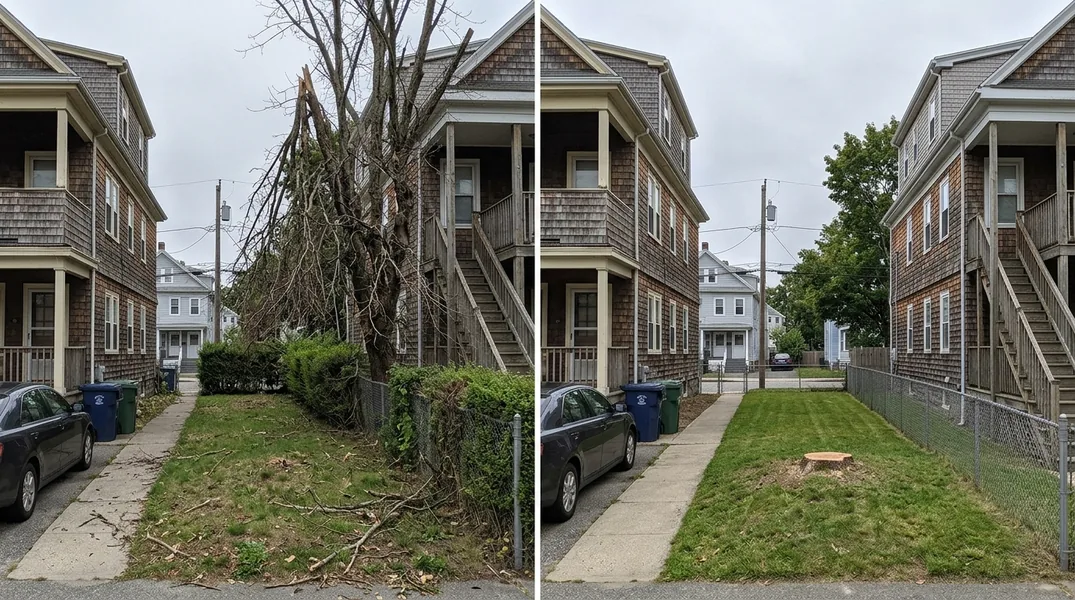
Understanding Massachusetts Public Shade Tree Law
If you own property in New Bedford, you may think you have complete freedom to remove any tree on your land. However, Massachusetts has strict regulations governing the removal of public shade trees, and violating these rules can result in significant fines and legal complications. The state's public shade tree law exists to protect the community's urban forest and maintain the environmental and aesthetic benefits that mature trees provide.
Public shade trees are trees located on public property, typically along streets, in parks, and on other municipal land. In New Bedford, these trees are considered community assets, and their removal or significant pruning requires approval from the local tree warden. Understanding this distinction is crucial before you attempt any Tree Removal work. Even if a tree appears to be near your property line, if its roots are on public land or if the tree is officially registered as a public shade tree, you cannot legally remove it without proper authorization.
What Is a Tree Removal Permit in New Bedford?
A tree removal permit New Bedford MA is an official document issued by the city that grants you permission to remove a tree from public property. This permit system is managed by the local tree warden, who is responsible for enforcing state and local tree protection ordinances. Before any public shade tree can be removed, the tree warden must inspect the tree and determine whether removal is justified. Common reasons for approval include disease, structural damage, safety hazards, or interference with utilities.
The permit process typically involves submitting a written request to the tree warden's office, providing details about the tree's location, species, condition, and your reason for wanting it removed. The tree warden will then conduct an inspection and make a determination. If approved, you'll receive your permit and can proceed with removal. If denied, you have the right to appeal, though most denials are upheld unless you can provide compelling evidence of danger or disease. This process exists to prevent unnecessary removal of healthy trees that contribute to the community's canopy and air quality.
The Role of the Tree Warden in New Bedford
The tree warden in New Bedford is a municipal official appointed to protect and manage the city's public shade trees. This person has significant authority over any tree located on public land and serves as the primary point of contact for all tree removal requests, disputes, and violations. The tree warden's job is to balance the needs of property owners and developers with the community's interest in preserving its urban forest. They have the power to issue citations, impose fines, and even pursue legal action against anyone who removes a public shade tree without authorization.
If you're unsure whether a tree near your property is considered public shade tree property, contacting the tree warden's office is your first step. They can provide official records about tree ownership and help clarify your rights and obligations. The tree warden can also recommend qualified contractors for Tree Trimming & Pruning and other services if your tree does require professional attention. Building a good relationship with the tree warden's office can save you time, money, and legal headaches down the road.
When You Need Approval Before Cutting Trees
Not every tree on or near your property requires a permit for removal. Generally, trees on your private property that are not classified as public shade trees can be removed at your discretion, though some municipalities have additional local ordinances. However, if the tree is on public land, if it's part of a historic district, or if it meets the definition of a public shade tree under Massachusetts law, you absolutely must obtain approval before proceeding. Cutting down a protected tree without permission is a violation that can result in fines ranging from hundreds to thousands of dollars, depending on the tree's size and age.
Trees that straddle property lines present a gray area. If the majority of the tree's trunk originates on public land, it's likely classified as public shade tree property, even if branches extend over your yard. Similarly, if a tree is registered on the city's official shade tree inventory, it has protected status regardless of where you believe the property line lies. Before you hire a contractor for Tree Removal, verify the tree's status with the tree warden's office. This simple step can prevent costly mistakes and legal disputes.
How to Request a Tree Removal Permit in New Bedford
The process for requesting a tree removal permit begins with contacting the tree warden's office in New Bedford. You'll need to provide specific information about the tree, including its exact location, species if known, and your reason for wanting it removed. Be prepared to explain why removal is necessary. Vague reasons like 'I don't like the way it looks' or 'It's in my way' are unlikely to be approved. Strong justifications include documented disease, structural damage that poses a safety risk, roots damaging utilities or foundations, or interference with power lines that poses a hazard.
Once you submit your request, the tree warden will schedule an inspection. During this visit, they'll assess the tree's health, stability, and overall condition. They may take photos, measure the trunk diameter, and document any visible problems. This inspection typically takes a few days to a few weeks to schedule, depending on the tree warden's workload. After the inspection, you'll receive a written decision. If approved, your permit will specify any conditions or requirements, such as using a licensed contractor or scheduling the work during a specific timeframe. If you're facing an urgent situation, such as a tree that has already fallen or poses an immediate safety threat, you may be eligible for Emergency Tree Service approval, which can expedite the process.
Tree Removal Cost in New Bedford: What to Budget
The cost of removing a tree in New Bedford varies widely depending on factors such as the tree's size, species, location, and condition. Small trees might cost between $200 and $500 to remove, while large mature trees can range from $1,000 to $3,000 or more. If the tree is in a difficult location, such as near power lines or close to buildings, the cost may increase. Additional services like Stump Grinding add to the total expense but are often worth the investment for complete property cleanup.
Before committing to any work, obtain a free estimate from a reputable local contractor. New Bedford Tree Service offers transparent pricing and detailed assessments of your specific situation. Call us at (508) 501-9002 to discuss your tree removal needs and get an accurate quote. Having multiple estimates allows you to compare costs and services, ensuring you're making an informed decision. Remember that the cheapest option isn't always the best, especially when dealing with protected trees where improper removal could result in fines that dwarf the original removal cost.
Common Violations and Penalties for Illegal Tree Removal
Removing a public shade tree without authorization is a serious violation in Massachusetts. Penalties can include substantial fines, often calculated based on the tree's diameter and age. For example, removing a large mature tree might result in a fine of $500 to $1,000 or more. In some cases, the city may require you to plant replacement trees or make a monetary contribution to the city's tree fund. Additionally, if the violation is egregious or repeated, you could face legal action and be required to pay the municipality's enforcement costs.
Beyond the financial penalties, illegal tree removal can create problems if you ever want to sell your property or obtain permits for future work. The violation will be recorded in municipal records and may complicate real estate transactions. Neighbors may also pursue civil action if they believe you've damaged the community's shared resources. The best approach is always to err on the side of caution and seek official approval before removing any tree that might be classified as public shade tree property. If you're unsure, contact the tree warden's office or reach out to New Bedford Tree Service at (508) 501-9002 for guidance on navigating the permitting process.
Looking for a professional tree service contractor in New Bedford? New Bedford Tree Service responds fast for all your tree service needs.
Get a Free QuoteOur services: Tree Removal · Tree Trimming & Pruning · Stump Grinding